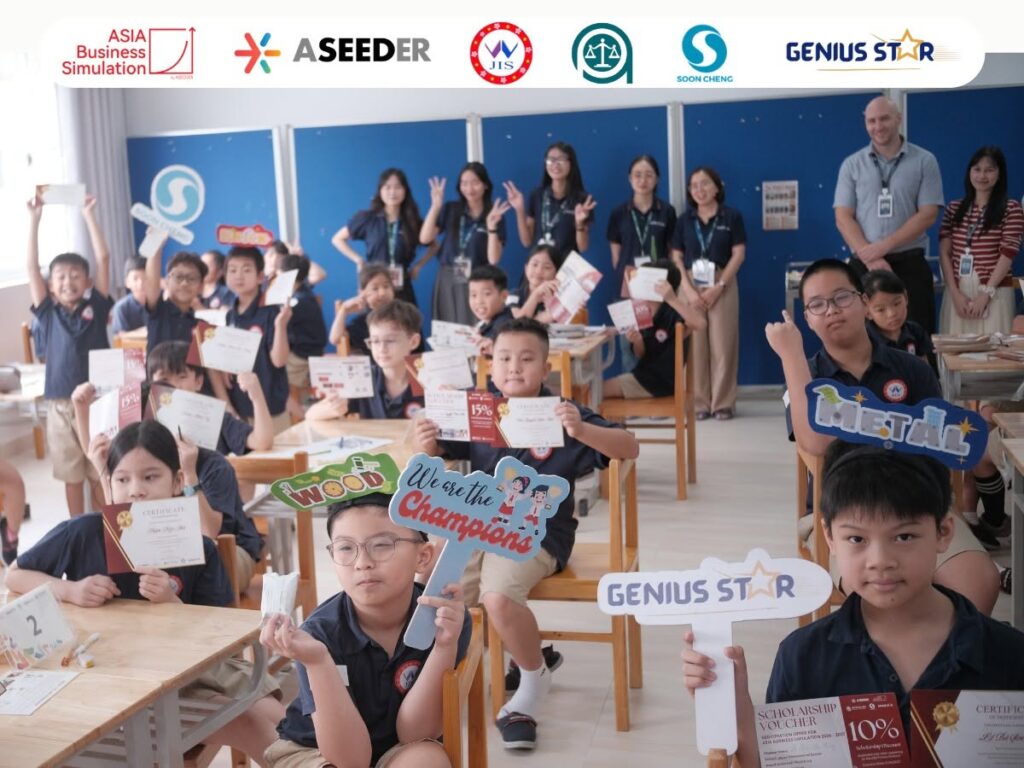
On September 18, 2026, GeniusStar, Soon Cheng, and the Phan Anh Social Foundation continued their collaboration with Wellspring International Bilingual School Hanoi, delivering a series of Asia Business Simulation (ABS) Workshops for students from primary to high school.
Designed around experiential learning, the workshops gave students opportunities to move beyond theoretical business concepts and experience what it means to make decisions as if they were running a real company. From managing limited budgets to planning production, allocating marketing resources, and selecting store locations, students explored how different business decisions can influence operational performance and profitability.
Through age-appropriate activities, the program introduced students to practical business and financial concepts in an interactive learning environment, encouraging them to experiment, analyze outcomes, and adjust their strategies.
1. Asia Business Simulation (ABS) Workshop: Learning by Doing
Business and finance are often introduced through concepts, formulas, and classroom discussions. However, understanding how these concepts work together requires opportunities to apply them.
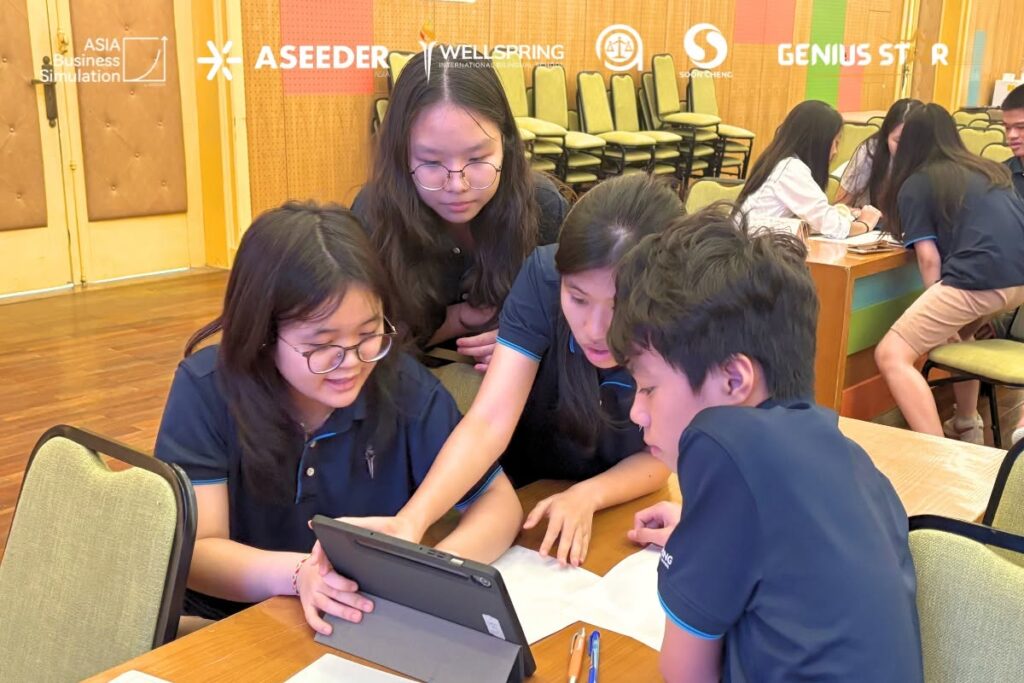
The ABS Business Simulation Workshop at Wellspring Hanoi addressed this learning opportunity by placing students in simulated business environments where their decisions had visible consequences.
Students explored questions that businesses face every day:
- How should a company allocate a limited budget?
- How many products should it produce?
- How much should it spend on marketing?
- Where should it locate its store?
- How can it manage costs while remaining competitive?
- What should it do when market conditions change?
Rather than receiving a single predetermined answer, students were encouraged to consider different options and understand the trade-offs behind each decision.
This process of testing, observing results, analyzing performance, and adjusting strategies helped make business concepts more tangible. It also demonstrated how planning, resource management, and teamwork contribute to business operations.
2. Asia Business Simulation (ABS) Workshop Primary: Business Auction for Students in Grades 4–6
2.1. Understanding Resources Through Simulated Auctions
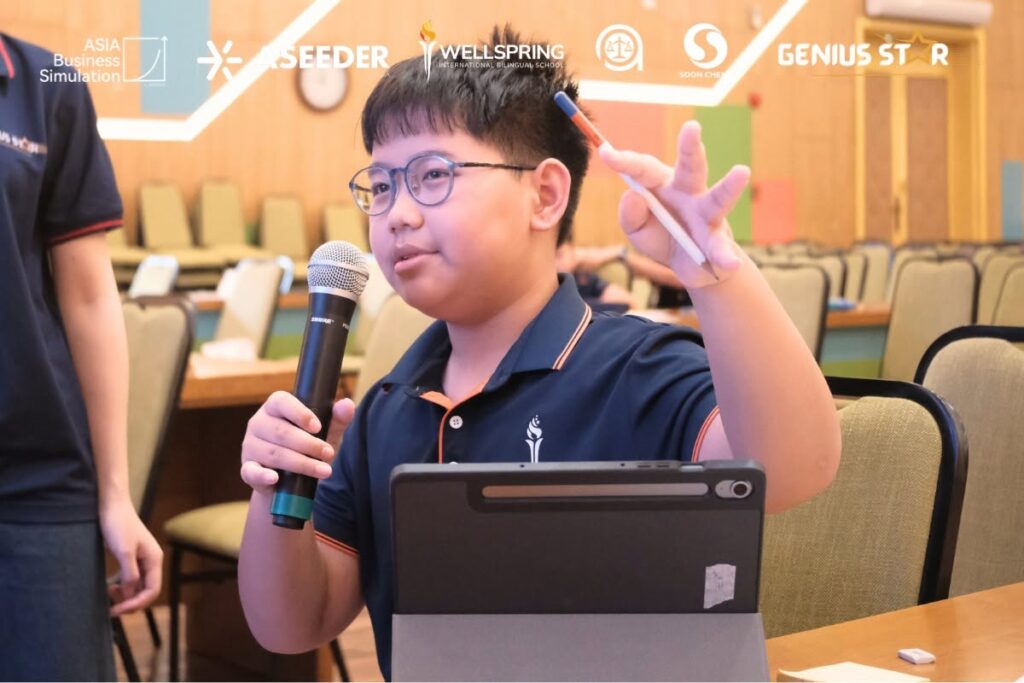
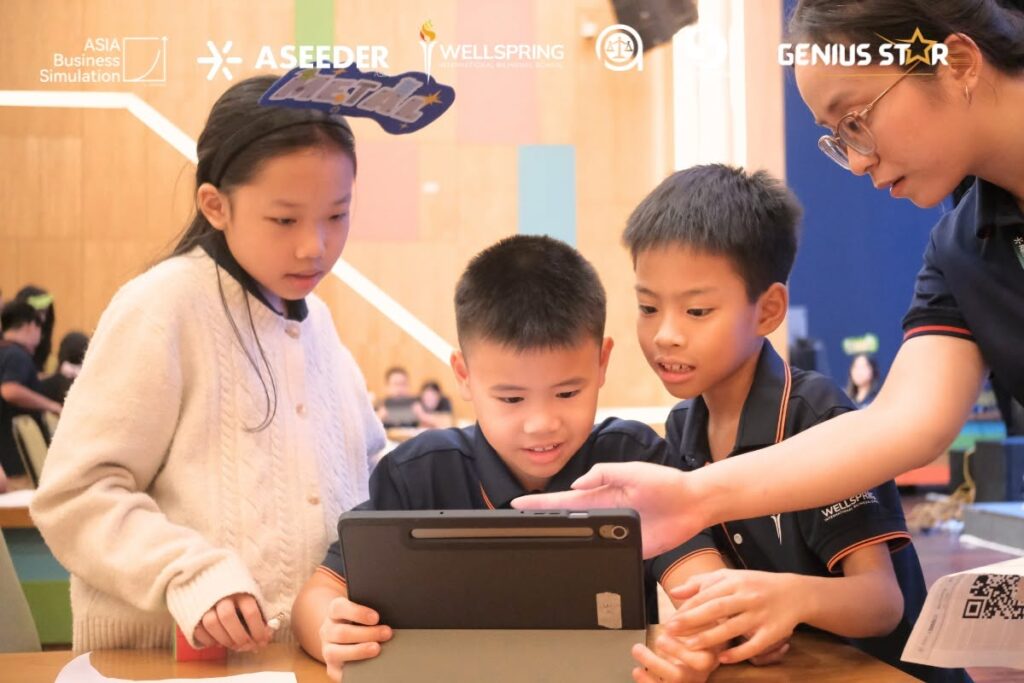
For students in Grades 4–6, the ABS Primary Business Auction introduced business thinking through an engaging simulated marketplace.
Each team worked with a limited budget and had to observe market conditions, assess the value of available resources, choose when to bid, and decide which resources were most important for its business.
These decisions required students to balance their ambitions against the resources available to them. Spending too much on one item could limit their ability to acquire other resources, while bidding strategically required teams to think carefully about priorities and potential opportunities.
The auction format made these decisions immediate and interactive, encouraging students to participate actively rather than simply memorize business terminology.
2.2. Building Early Business and Financial Awareness
Through the Business Auction, students were introduced to foundational concepts such as:
- Budgeting: Making decisions within a limited financial budget.
- Resource allocation: Prioritizing the resources a business needs.
- Value assessment: Considering the usefulness of a resource before bidding.
- Competition: Responding to other teams in a changing marketplace.
- Strategic thinking: Planning decisions around specific objectives.
- Teamwork: Discussing options and reaching decisions collaboratively.
Although presented through an accessible activity, these concepts reflect practical challenges faced by businesses of different sizes.
For young learners, the experience offers an engaging starting point for understanding how money, resources, and decisions are connected.
3. Asia Business Simulation (ABS) Workshop Junior & Senior: Business Operation Simulation for Students in Grades 6–12
3.1. Stepping Into the Role of a CEO
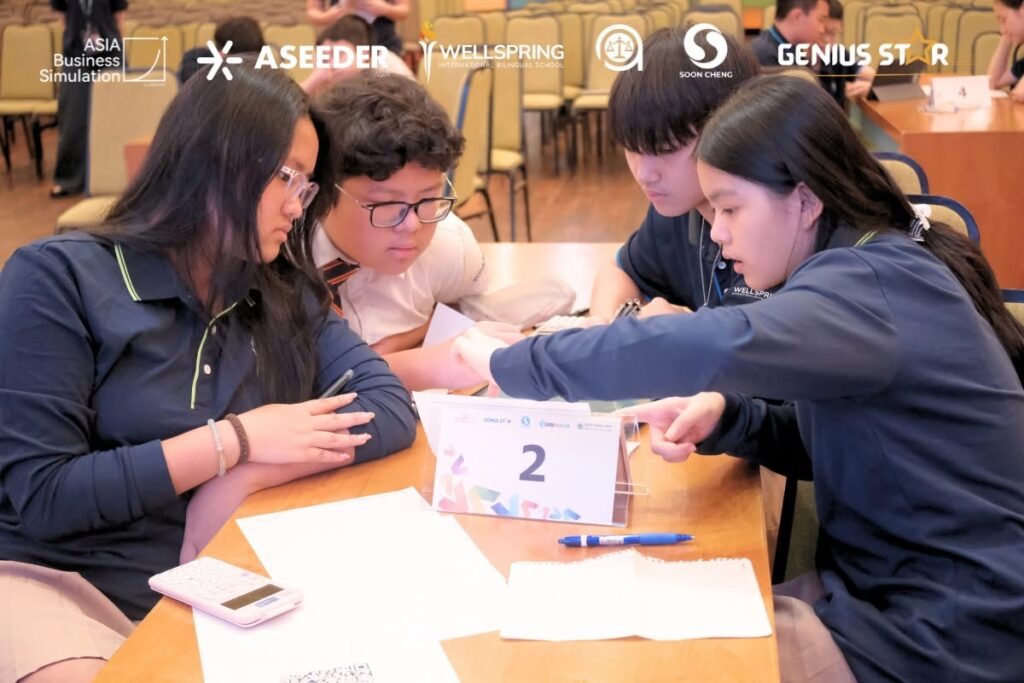
A key highlight of the Wellspring collaboration was the introduction of the Business Operation Simulation Workshop for students in Grades 6–12. This business operations workshop was a new addition to the school’s workshop series.
Moving beyond the initial experience of resource selection, students took on the role of decision-makers responsible for running a simulated business.
They were challenged to make interconnected operational decisions, including:
- Determining production quantities.
- Allocating budgets for marketing.
- Selecting suitable store locations.
- Managing costs while improving competitiveness.
- Adjusting business strategies in response to changing market conditions.
Each decision required students to consider how different parts of a business influence one another. For example, increasing production without considering demand or costs may not lead to better financial results. Similarly, spending more on marketing requires careful consideration of the budget and potential business outcomes.
By working through these simulated scenarios, students could explore the relationship between operational planning, financial management, marketing, and business strategy.
3.2. Turning Business Theory Into Practical Decision-Making
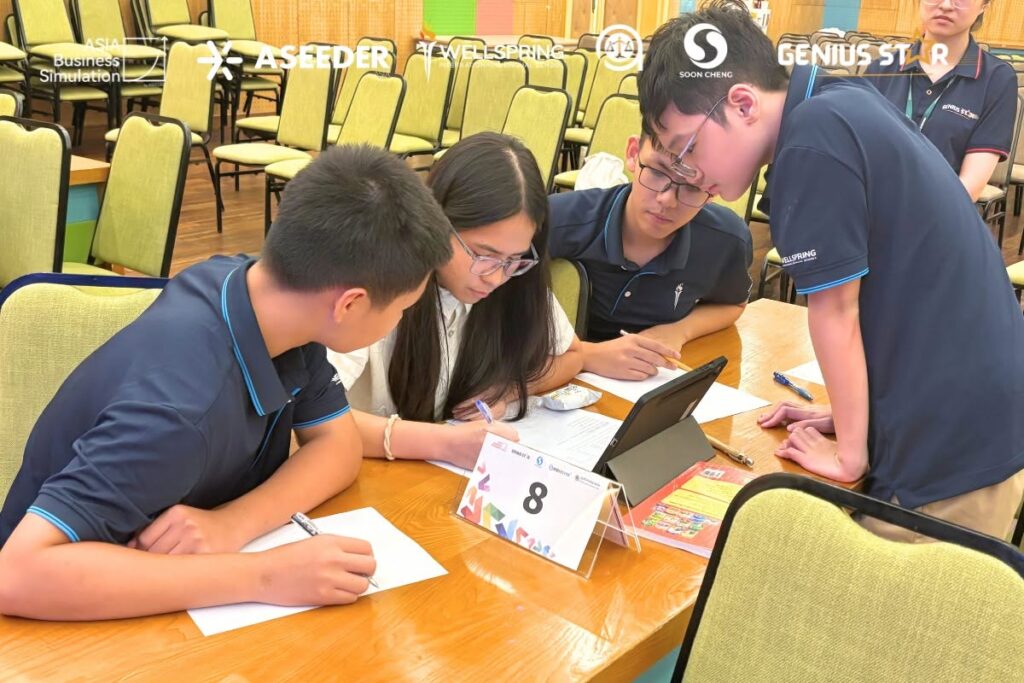
The value of Business Operation Simulation lies in its interactive learning process.
Students can make a decision, observe its consequences, analyze what happened, and consider how they might respond differently in the next round. This creates opportunities to learn through experimentation rather than relying solely on explanations.
The simulation also encourages students to consider the wider impact of their choices. Business decis
ions are rarely isolated: production affects costs, marketing influences competitiveness, and resource allocation shapes what a company can achieve.
By exploring these connections, students gain a more integrated understanding of how businesses operate.
4. How Asia Business Simulation (ABS) Supports Experiential Business Education
The workshops at Wellspring reflect the broader educational approach of the Asia Business Simulation (ABS), which introduces students to business concepts through simulation-based and project-oriented learning.
Established in 2011, ABS has engaged more than 100,000 participants worldwide, according to the program information featured in GeniusStar’s ABS workshop communications.
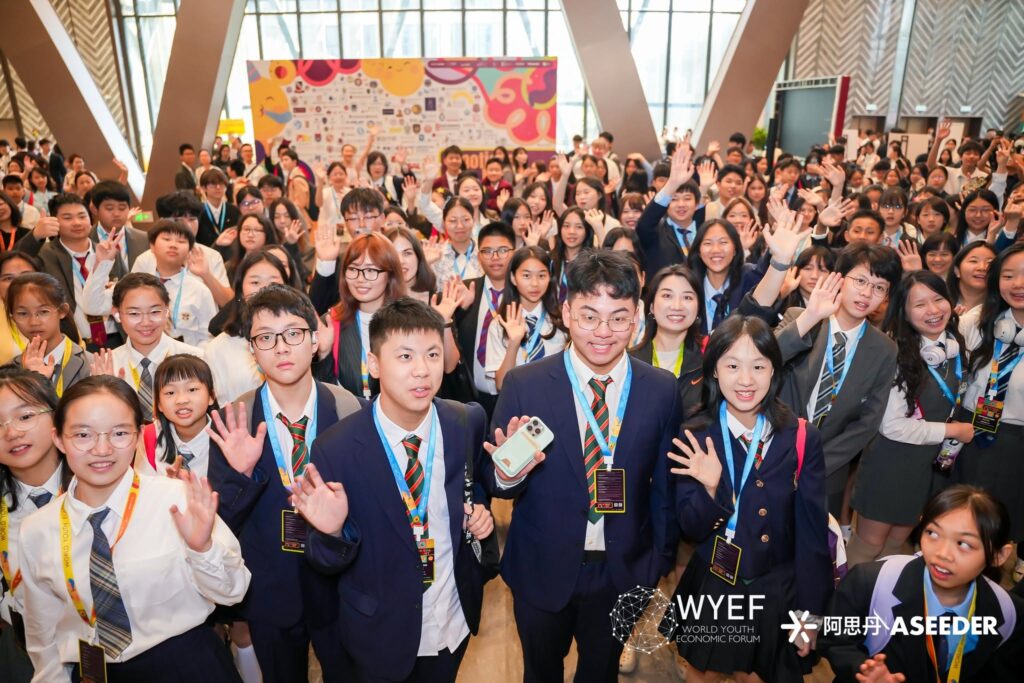
Rather than treating business as a subject that students can only study at an advanced level, ABS creates opportunities to explore business concepts through activities suited to different age groups.
For primary students, the Business Auction provides an introduction to budgeting, resource allocation, competition, and collaborative decision-making. For older students, Business Operation Simulation expands the experience to include production, marketing, store location, cost control, and strategic adjustments.
Together, these activities illustrate how experiential business education can help students connect ideas with practical decisions.
The workshops also create opportunities to strengthen transferable skills, including critical thinking, problem-solving, communication, teamwork, and financial awareness. These skills can support students not only in future business-related learning but also in approaching everyday challenges more thoughtfully.
5. Continuing the Asia Business Simulation (ABS) Wokshop Journey Across Vietnam
The ABS Business Simulation Workshop at Wellspring Hanoi represents another step in GeniusStar’s efforts to bring practical business and financial learning opportunities to students in Vietnam.
GeniusStar extends its appreciation to Wellspring International Bilingual School Hanoi for continuing this collaboration and supporting opportunities for students to explore new learning approaches.
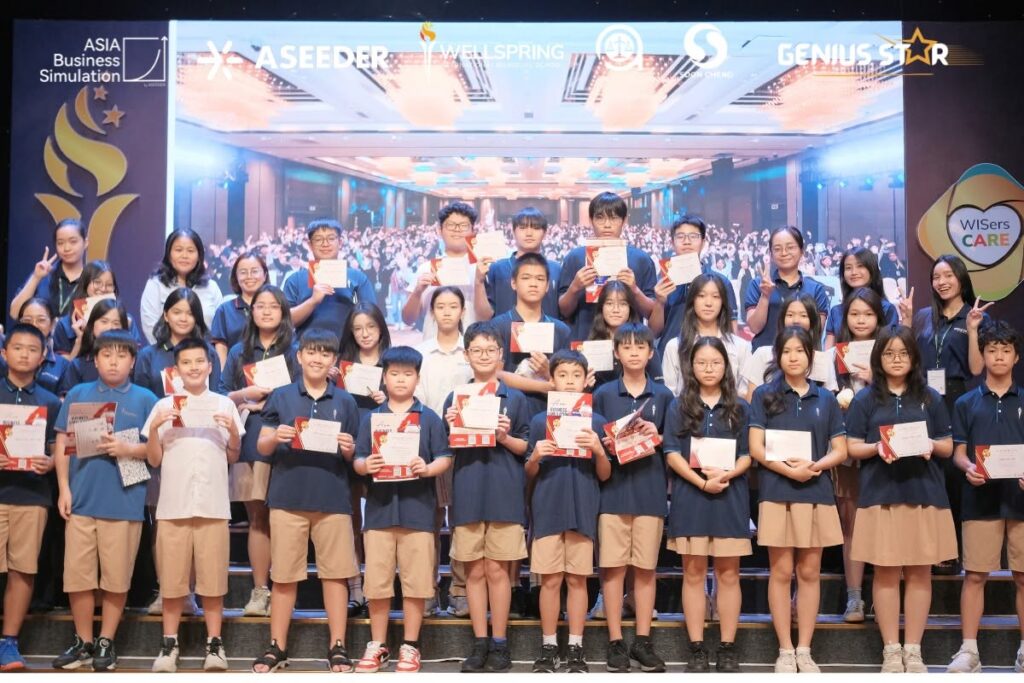
Together with Soon Cheng and the Phan Anh Social Foundation, GeniusStar aims to continue working with schools across Vietnam to deliver Business Simulation Workshops tailored to different age groups and educational objectives.
By encouraging students to learn through action, these workshops seek to nurture financial awareness, strategic thinking, decision-making, problem-solving, and collaboration from an early age.
Schools and educators interested in organizing a Business Simulation Workshop for students in Grades 4–12 are welcome to contact the Asia Business Simulation Vietnam Fanpage to discuss program details and suitable implementation options.
Discover more about the Asia Business Simulation program and its approach to experiential business education.